Ain Manawir
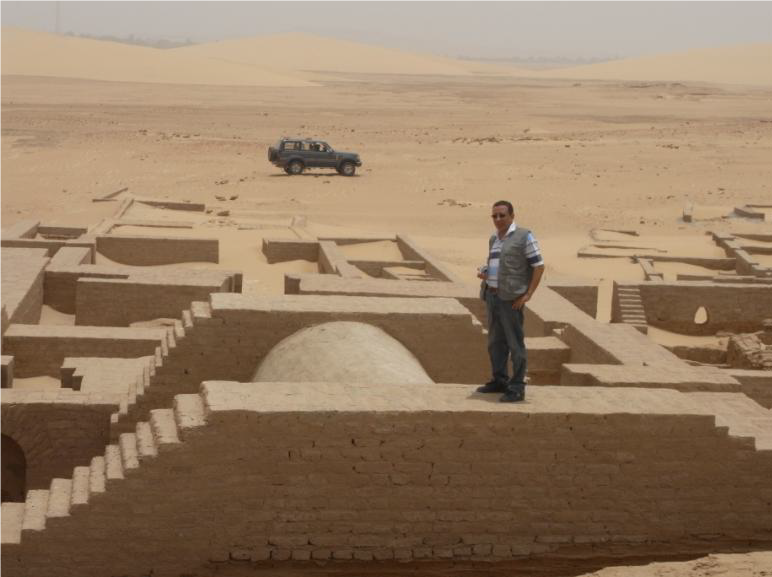
The most interesting remains at Ain Manawir are the extensive underground aqueducts known as qanats constructed here by the Persians in the 5th century BC. The aqueduct system, consisting of long underground tunnels, provided the settlement with water but also irrigated fields and orchards. A small mudbrick temple built in the 5th century BC and dedicated to Osiris is the only shrine known on the site. Among the finds in the temple were moulded glass pieces that had been used in a mosaic relief similar to those found on the walls of the temples in Persia. These finds suggest the technique was introduced to Egypt a hundred years earlier than previously thought. Attached to and surrounding the temple are a number of mudbrick buildings that were all connected to the administration of the temple. One building contained some ovens, therefore it may have been the bakery or kitchen of the temple. In the area, mainly in the priest’ quarters, the excavators have uncovered about 450 ostraca, which include a number documenting water collected from the aqueducts in the Persian period. Other deal with contracts concerning water rights, or are religious documents. They date in range from Darius I (c. 521-486 BC) and Artaxerxes I (c. 465-424 BC) in the 27th dynasty to Amyrtaios (around 400 BC) in the 28th, describing the time of the digging of the qanats and their use. The settlement at Ain Manawir was probably abandoned in the beginning of the 4th century and was not resettled until Roman times. The Romans reused the qanats and dug them even deeper, but eventually it seems that this source also dried out and the site was abandoned by the 3rd century AD (CISS Inventory 2010).
Site coordinates: N 24 34 300 E 30 40 351