Hibis Temple
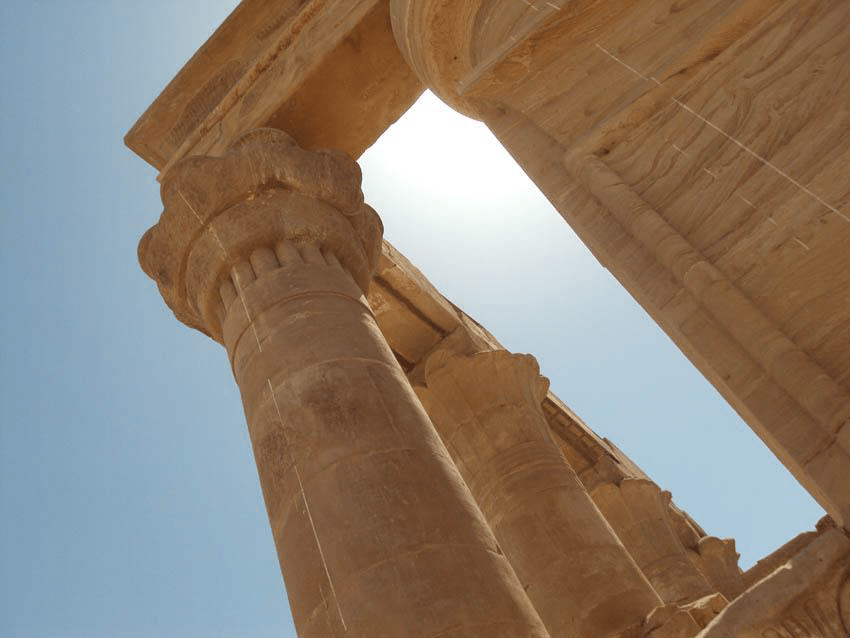
HibisTemple is the largest temple in Kharga oasis and is also the best preserved structure in Egypt from the Saite and Persian periods (partly because it was buried in sand until excavations by the Metropolitan Museum of Art dug it out around 1909-10).It is located 2 kilometres north of Qasr Kharga, on the paved road to the airport.It is a sandstone temple that stood in the centre of the ancient town called Hibis.The name Hibis derived from the Ancient Egyptian Hbt, which means “the plough”, and was the ancient name for the whole oasis.Hibis was in ancient times the garrisoned capital of the oasis; it was a busy, bawdy town; caravans stayed in the town a few days longer than necessary to enjoy its pleasures. Hibis Temple was begun by Apries in 588 B.C., during the Twenty-sixth Dinasty, continued by his successor Amasis II, and completed by Darius I in 522 B.C. The temple was built by the Persians, but further additions were made by later pharaohs; moreover, a fourth century church was built along the north side of the portico. Today the temple is located in a picturesque palm grove and it is approached through a Roman gate with inscriptions that provide information on a variety of topics regarding Roman rule (such as taxation, court system, inheritance and rights of women). Hibis Templeis dedicated to the Theban triad of Amun, Mut and Khonsu, and reliefs are in very good conditions. There is also a large wall relief of Seth, the god of the oases, with a blue body and the head of a falcon; he slays a serpent with his spear. In front of the temple there are Greek and Roman tombs (CISS Inventory 2010; Vivian, 1990).
Site coordinates: N 25 28 362 E 30 33 316
Price (years 2019-2020): 80 EGP (foreigner), 40 EGP (foreigner student), 10 EGP (Egyptian), 5 EGP (Egyptian student).