Necropolis of Muzawwaqa
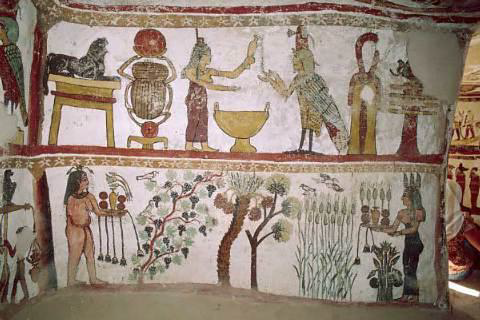
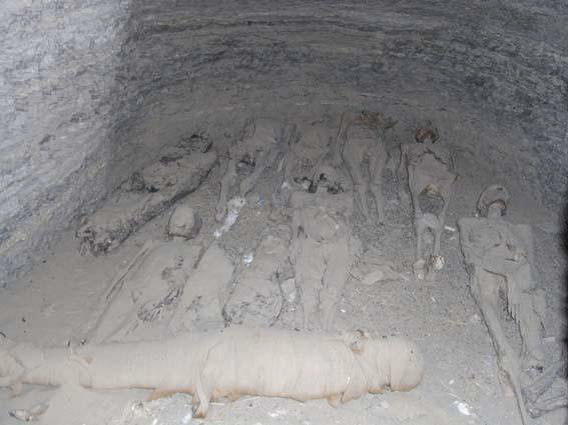
The Necropolis of Muzawwaqa served the nearby town of Amheida and was in use from at least the Ptolemaic period. It is located on the paved road between Dakhla and Farafra.More than 300 tombs have been recorded here. The name “Muzzawaqa” derives from the Arabic for “decorated” referring to the wall paintings of some of the tombs. Two tombs stand out: the single room tomb of Petubastis and the double room tomb of Padiosiris, both decorated with exquisite full colour paintings according to the ancient convention of tomb decoration. The two tombs date from the Roman period but have an interesting combination of Ancient Egyptian and Roman funerary motifs. The tomb of Petubastis dates to the 1st century AD; it contains a single chamber with burial niches for the mummies of the deceased and his family. The ceiling is decorated with a zodiac and on the eastern wall of the chamber there is a portrait of the tomb owner. The tomb of Petosiris is of a slightly later date and contains two chambers with the same type of burial niches for the mummies as in the tomb of Petubastis. The portrait of the tomb owner is surrounded by ancient Egyptian religious symbols and hieroglyphic text. Both tombs also have representations of the god Tutu, one of the most important gods of the oasis. Northeast of the main cemetery at Muzzawaqa there is a Christian cemetery from the 4th-5th centuries. It was probably not associated with Amheida, but connected to a small settlement nearby. Here people were buried in simple graves, on their backs with the head to the west, wrapped in some textile and without grave goods as was the Christian burial custom of the time (CISS Inventory 2010; Vivian 1990).
Site coordinates: N 25 40 839 E 28 50 314
Price (years 2019-2020): 40 EGP (foreigner), 20 EGP (foreigner student), 10 EGP (Egyptian), 5 EGP (Egyptian student).